Heat and Smoke Vents in Chicago, IL
Heat and Smoke Vents
The Importance of Commercial Smoke Ventilation Installation
Commercial smoke ventilation systems are designed to remove or extract smoke and ensure it is vented safely outside. They are a critical component of any commercial property's fire and smoke detection and prevention systems and can improve visibility in a fire, save lives, reduce the risk of smoke-related injuries and diseases, and reduce structure damage. The NFPA sets standards for commercial fire safety and requires the installation of commercial smoke ventilation equipment in specific areas of commercial properties.
NFPA Regulations Regarding Commercial Smoke Ventilation
NFPA regulations require heat and smoke vent installation in commercial properties. Each building must have automatic smoke vents that are triggered to open if they sense heat. They must be UL 793 certified. The property’s smoke ventilation system must efficiently and sufficiently remove smoke and heat according to specifications determined by the size, fire load, and occupancy of the building. The design and placement of smoke ventilation installation should optimize airflow and exhaust smoke and heat as efficiently as possible. All vents must be regularly tested, and property owners must schedule routine smoke vent service and maintenance to maintain safety and functionality.
Smoke Vent Services Offered by NSS Exteriors
At NSS Exteriors, we offer quality, durable smoke vent skylights for a wide variety of commercial spaces and applications. Our products are corrosion resistant, designed to withstand the local weather and climate, and function according to NFPA standards:
- Smoke Vent Panels - Commercial smoke vent panels or automatic opening vents (AOVs) are designed to vent smoke and heat from your commercial property in the event of a fire. This improves visibility and safety and reduces the risk of injury from smoke inhalation and property damage from smoke exposure or residue.
- Smoke Vent Skylights - Commercial smoke vent skylights are designed to open automatically when they sense heat or smoke, allowing the heat and smoke to safely be vented from the building. They use electro-thermal links or fusible links to detect smoke and heat.
Our Skylight and Skylight Vent Products
We understand that you have a lot of choices when it comes to skylights, and we can help you find the right product for your specific project and taste. We offer commercial skylight installation, repair and maintenance, and retrofit and replacement services. We also offer custom smoke vent skylight installations and maintenance and inspection services for skylight ventilation systems that we have installed. Here is a look at some of our most popular products:
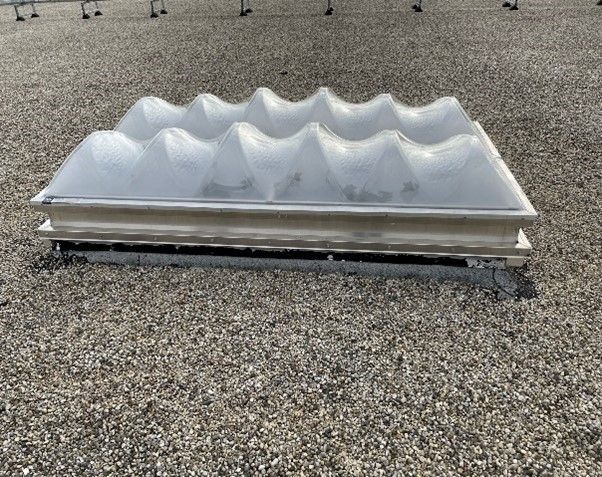
- Kingspan Series 3400 Polycarbonate Smoke Vent - The Kingspan Series 3400 is an aluminum-framed polycarbonate smoke and heat vent. It allows natural light in but also provides safe, efficient dispersal of hot gases and smoke during a fire. These smoke ventilation system skylights are designed to perform under extreme conditions and minimize structural damage to the property, reduce fire spread, vent toxic smoke, reduce heat, and increase visibility for first responders. They are fitted with silicone seals and EPDM gaskets that prevent air and water filtration, and the doors are compression-loaded and secured with latches. They include polycarbonate Skywave or KAT glazing options for improved lighting and strength and can be mounted on a flat roof up to 5:12 pitch.
- VELUX Electric “Fresh Air” Skylights - VELUX Electric Fresh Air Skylights offer enhanced natural light, simple integration with smart home technology, rain sensors, and remote-controlled ventilation operation. They are designed for curb and deck-mounted installation. With just the push of a button on a remote, the skylight opens and vents stale air out while allowing fresh air in. This skylight can be installed with a solar shade or other VELUX skylight shades and can be equipped with voice control, automatic control, and smart home automation capabilities. The standard laminated safety glass has an advanced low-e protective coating and is sealed with argon gas. The integrated rain sensor will close the skylight automatically at the first sign of rain. The skylight also includes an insect screen to prevent bugs and debris from entering and VELUX flashing to create a weathertight seal.
- Kalwall S-Lines - Kalwall S-Line Skylights are ideal for areas that get extreme heat or weather, as they are wind, heat, and impact resistant. S-Line skylights are a translucent skylight system that offers superior thermal performance and natural light flow. They are designed to minimize glare, solar heat gain, and shadows and can provide or supplement natural light in hard-to-reach areas of commercial properties. They are manufactured from shatterproof FRP face sheets and factory-sealed aluminum perimeter curbs. They are vandal and tamper-resistant, can withstand extreme conditions like high heat, high winds, and impact, and are rated Class A fire-resistant. Insulation options allow you to achieve low U-values and improve the energy efficiency of the property.
Learn More About Commercial Smoke and Heat Ventilation Options
At NSS Exteriors, we install commercial smoke vent panels and smoke vent skylights that improve visibility for first responders and inhabitants in the event of a fire, improve fire evacuation times, lower the risk of smoke inhalation and injury, enhance the safety of your property, and reduce the risk of structural heat and smoke damage. Call us now or contact us online to learn more about installing commercial smoke ventilation systems in Chicago, IL.
FAQs About Heat & Smoke Vents in Chicago, IL
What are the signs that a heat and smoke vent needs repair? Like any mechanical system, heat and smoke vents can develop problems over time. If a vent does not open or close properly, shows visible corrosion, has damaged seals or covers, or leaks during rainstorms, it should be inspected as soon as possible. You may also notice issues with manual release mechanisms, automatic actuators, or electrical components that prevent the vent from operating correctly. Routine inspections often identify small problems before they become major safety concerns.
How do heat and smoke vents work? Heat and smoke vents are installed on the roof of a commercial building and are designed to open automatically or manually during a fire. As heat rises, the vents release hot gases and smoke through the roof, helping to reduce dangerous smoke buildup inside the building. Many systems are activated by fusible links that melt at a specific temperature, while others use electric controls connected to the building's fire alarm or smoke detection system. By venting heat and smoke, these systems can improve visibility for occupants and first responders while reducing extreme temperatures that can contribute to structural damage.
What types of commercial buildings use heat and smoke vents? Heat and smoke vents are commonly found in commercial and industrial buildings with large, open floor plans where smoke can accumulate quickly. They are frequently installed in:
- Warehouses and distribution centers
- Manufacturing facilities
- Aircraft hangars
- Storage buildings
- Retail centers
- Industrial plants
- Large commercial workshops
How often should heat and smoke vents be inspected? Most commercial heat and smoke vent systems should be visually inspected at least once each year, with more comprehensive operational testing performed according to manufacturer recommendations and local fire safety requirements. Regular inspections verify that vent covers, hinges, release mechanisms, actuators, and weather seals remain in proper working condition. Buildings located in areas with severe weather or significant airborne debris may benefit from more frequent inspections to prevent corrosion or mechanical failures.
Do heat and smoke vents help with natural ventilation? Some heat and smoke vent systems can also contribute to natural ventilation during normal building operation. Ventilating units may be opened to release excess heat, improve airflow, and reduce indoor temperatures without relying entirely on mechanical ventilation systems. However, not every smoke vent is designed for daily ventilation. Some units are intended solely for emergency operation, while others are specifically manufactured to serve both fire safety and natural ventilation purposes. The appropriate option depends on your building's design and operational needs.
What are the different types of smoke vents and how do they work? Selecting the right system depends on your facility's layout, occupancy, and fire protection requirements, and our team can help you select the right one. The types of smoke vents available include:
- Automatic smoke vents open when heat activates a fusible link or when connected fire detection systems trigger the release mechanism.
- Manual smoke vents are opened by building personnel using pull stations or manual controls during an emergency.
- Pneumatic or electric smoke vents use powered actuators for faster, more controlled operation and are often integrated with building management systems.
- Combination ventilation vents provide both emergency smoke ventilation and everyday natural ventilation, allowing building owners to improve indoor air circulation while maintaining fire protection capabilities.